Spy Eyes
Book: Computer Spy Games
Author: Jenny Tyler and Chris Oxlade
Translator: Marcus Medina
Story
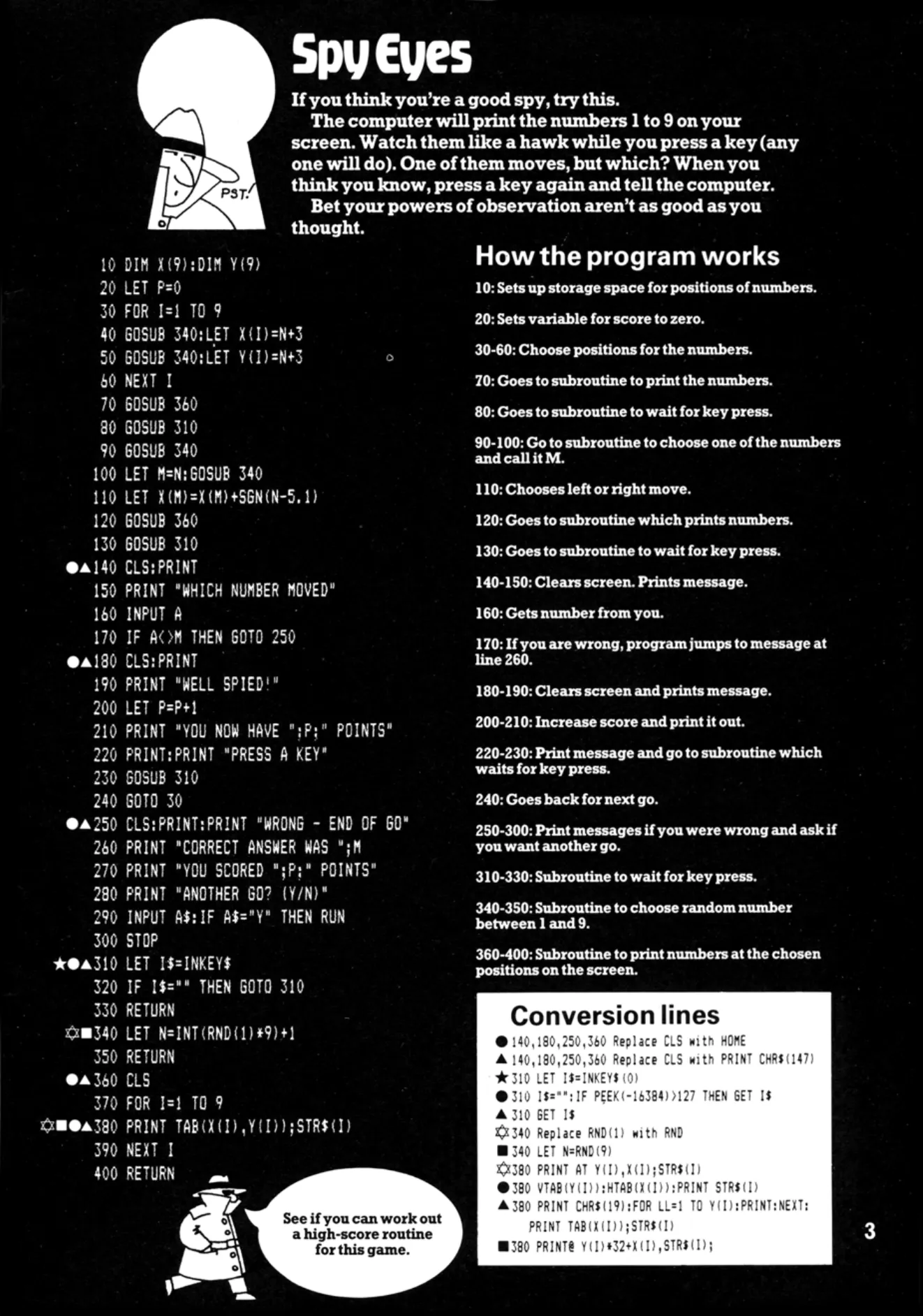
If you think you’re a good spy, try this.
The computer will print the numbers 1 to 9 on your screen. Watch them like a hawk while you press a key (any one will do). One of them moves, but which? When you think you know, press a key again and tell the computer.
Bet your powers of observation aren’t as good as you thought.
Pseudocode
SET score = 0LOOP forever PLACE numbers 1-9 at random positions on screen DISPLAY the numbers WAIT for keypress PICK one number at random to move MOVE it one step left or right (random direction) REDRAW the numbers WAIT for keypress ASK "WHICH NUMBER MOVED" IF correct THEN PRINT "WELL SPIED!", increase score PRINT score, wait for keypress, loop again ELSE PRINT "WRONG - END OF GO", correct answer, final score ASK "ANOTHER GO?" IF yes THEN restart with score reset ELSE end END IFEND LOOPFlowchart
flowchart TD
    Start --> Init[Set score to 0]
    Init --> Place[Place 9 numbers at random positions]
    Place --> Show[Display the numbers]
    Show --> Wait1[Wait for keypress]
    Wait1 --> Pick[Pick one number to move]
    Pick --> Move[Move it one step left or right]
    Move --> Redraw[Redraw the numbers]
    Redraw --> Wait2[Wait for keypress]
    Wait2 --> Ask[Ask which number moved]
    Ask --> Check{Correct?}
    Check -->|Yes| Spied["Print: WELL SPIED!"]
    Spied --> Score[Increase and show score]
    Score --> Place
    Check -->|No| Wrong["Print: WRONG - END OF GO"]
    Wrong --> Final[Show correct answer and final score]
    Final --> Again{Another go?}
    Again -->|Yes| Init
    Again -->|No| End[End]
Code
Pages
ZX-81 BASIC
10 DIM X(9):DIM Y(9)20 LET P=030 FOR I=1 TO 940 GOSUB 340:LET X(I)=N+350 GOSUB 340:LET Y(I)=N+360 NEXT I70 GOSUB 36080 GOSUB 31090 GOSUB 340100 LET M=N:GOSUB 340110 LET X(M)=X(M)+SGN(N-5.1)120 GOSUB 360130 GOSUB 310140 CLS:PRINT150 PRINT "WHICH NUMBER MOVED"160 INPUT A170 IF A<>M THEN GOTO 250180 CLS:PRINT190 PRINT "WELL SPIED!"200 LET P=P+1210 PRINT "YOU NOW HAVE ";P;" POINTS"220 PRINT:PRINT "PRESS A KEY"230 GOSUB 310240 GOTO 30250 CLS:PRINT:PRINT "WRONG - END OF GO"260 PRINT "CORRECT ANSWER WAS ";M270 PRINT "YOU SCORED ";P;" POINTS"280 PRINT "ANOTHER GO? (Y/N)"290 INPUT A$:IF A$="Y" THEN RUN300 STOP310 LET I$=INKEY$320 IF I$="" THEN GOTO 310330 RETURN340 LET N=INT(RND(1)*9)+1350 RETURN360 CLS370 FOR I=1 TO 9380 PRINT TAB(X(I),Y(I));STR$(I)390 NEXT I400 RETURNC#
using System;
class SpyEyes{    const int Size = 16;    static Random rnd = new Random();    static int[] x = new int[9];    static int[] y = new int[9];    static int score = 0;
    static void Main()    {        while (true)        {            PlaceNumbers();            Draw();            Console.Write("Press Enter...");            Console.ReadLine();
            int m = rnd.Next(9);            int dir = rnd.Next(2) == 0 ? -1 : 1;            x[m] = Math.Clamp(x[m] + dir, 0, Size - 1);
            Draw();            Console.Write("Press Enter...");            Console.ReadLine();
            Console.Write("Which number moved (1-9)? ");            if (!int.TryParse(Console.ReadLine(), out int guess)) guess = -1;
            if (guess == m + 1)            {                Console.WriteLine("WELL SPIED!");                score++;                Console.WriteLine($"You now have {score} points");                Console.Write("Press Enter...");                Console.ReadLine();            }            else            {                Console.WriteLine("WRONG - END OF GO");                Console.WriteLine($"Correct answer was {m + 1}");                Console.WriteLine($"You scored {score} points");                Console.Write("Another go? (Y/N): ");                string again = Console.ReadLine()?.Trim().ToUpper();                if (again == "Y")                {                    score = 0;                    continue;                }                return;            }        }    }
    static void PlaceNumbers()    {        for (int i = 0; i < 9; i++)        {            x[i] = rnd.Next(4, 13);            y[i] = rnd.Next(4, 13);        }    }
    static void Draw()    {        char[,] grid = new char[Size, Size];        for (int r = 0; r < Size; r++)            for (int c = 0; c < Size; c++)                grid[r, c] = ' ';
        for (int i = 0; i < 9; i++)            grid[y[i], x[i]] = (char)('1' + i);
        Console.Clear();        for (int r = 0; r < Size; r++)        {            for (int c = 0; c < Size; c++)                Console.Write(grid[r, c]);            Console.WriteLine();        }    }}
Python
import random
SIZE = 16
def place_numbers():    xs = [random.randint(4, 12) for _ in range(9)]    ys = [random.randint(4, 12) for _ in range(9)]    return xs, ys
def draw(xs, ys):    grid = [[" " for _ in range(SIZE)] for _ in range(SIZE)]    for i in range(9):        grid[ys[i]][xs[i]] = str(i + 1)    print()    for row in grid:        print("".join(row))
def spy_eyes():    score = 0    while True:        xs, ys = place_numbers()        draw(xs, ys)        input("Press Enter...")
        m = random.randint(0, 8)        direction = random.choice([-1, 1])        xs[m] = max(0, min(SIZE - 1, xs[m] + direction))
        draw(xs, ys)        input("Press Enter...")
        try:            guess = int(input("Which number moved (1-9)? "))        except ValueError:            guess = -1
        if guess == m + 1:            print("WELL SPIED!")            score += 1            print(f"You now have {score} points")            input("Press Enter...")        else:            print("WRONG - END OF GO")            print(f"Correct answer was {m + 1}")            print(f"You scored {score} points")            again = input("Another go? (Y/N): ").strip().upper()            if again == "Y":                score = 0                continue            return
if __name__ == "__main__":    spy_eyes()
Java
import java.util.Random;import java.util.Scanner;
public class SpyEyes {    static final int SIZE = 16;    static Random rnd = new Random();    static int[] x = new int[9];    static int[] y = new int[9];    static int score = 0;    static Scanner scanner = new Scanner(System.in);
    public static void main(String[] args) {        while (true) {            placeNumbers();            draw();            System.out.print("Press Enter...");            if (!scanner.hasNextLine()) return;            scanner.nextLine();
            int m = rnd.nextInt(9);            int dir = rnd.nextBoolean() ? 1 : -1;            x[m] = Math.max(0, Math.min(SIZE - 1, x[m] + dir));
            draw();            System.out.print("Press Enter...");            if (!scanner.hasNextLine()) return;            scanner.nextLine();
            System.out.print("Which number moved (1-9)? ");            if (!scanner.hasNextLine()) return;            int guess;            try {                guess = Integer.parseInt(scanner.nextLine().trim());            } catch (NumberFormatException e) {                guess = -1;            }
            if (guess == m + 1) {                System.out.println("WELL SPIED!");                score++;                System.out.println("You now have " + score + " points");                System.out.print("Press Enter...");                if (!scanner.hasNextLine()) return;                scanner.nextLine();            } else {                System.out.println("WRONG - END OF GO");                System.out.println("Correct answer was " + (m + 1));                System.out.println("You scored " + score + " points");                System.out.print("Another go? (Y/N): ");                if (!scanner.hasNextLine()) return;                String again = scanner.nextLine().trim().toUpperCase();                if (again.equals("Y")) {                    score = 0;                    continue;                }                return;            }        }    }
    static void placeNumbers() {        for (int i = 0; i < 9; i++) {            x[i] = 4 + rnd.nextInt(9);            y[i] = 4 + rnd.nextInt(9);        }    }
    static void draw() {        char[][] grid = new char[SIZE][SIZE];        for (char[] row : grid) java.util.Arrays.fill(row, ' ');        for (int i = 0; i < 9; i++) grid[y[i]][x[i]] = (char) ('1' + i);
        System.out.println();        for (char[] row : grid) {            System.out.println(new String(row));        }    }}
Go
package main
import (  "bufio"  "fmt"  "math/rand"  "os"  "strconv"  "strings"  "time")
const size = 16
var x, y [9]intvar score int
func placeNumbers() {  for i := 0; i < 9; i++ {    x[i] = 4 + rand.Intn(9)    y[i] = 4 + rand.Intn(9)  }}
func draw() {  grid := make([][]byte, size)  for r := range grid {    grid[r] = make([]byte, size)    for c := range grid[r] {      grid[r][c] = ' '    }  }  for i := 0; i < 9; i++ {    grid[y[i]][x[i]] = byte('1' + i)  }  fmt.Println()  for _, row := range grid {    fmt.Println(string(row))  }}
func main() {  rand.Seed(time.Now().UnixNano())  reader := bufio.NewReader(os.Stdin)
  for {    placeNumbers()    draw()    fmt.Print("Press Enter...")    if _, err := reader.ReadString('\n'); err != nil {      return    }
    m := rand.Intn(9)    dir := 1    if rand.Intn(2) == 0 {      dir = -1    }    x[m] += dir    if x[m] < 0 {      x[m] = 0    }    if x[m] > size-1 {      x[m] = size - 1    }
    draw()    fmt.Print("Press Enter...")    if _, err := reader.ReadString('\n'); err != nil {      return    }
    fmt.Print("Which number moved (1-9)? ")    line, err := reader.ReadString('\n')    if err != nil {      return    }    guess, convErr := strconv.Atoi(strings.TrimSpace(line))    if convErr != nil {      guess = -1    }
    if guess == m+1 {      fmt.Println("WELL SPIED!")      score++      fmt.Printf("You now have %d points\n", score)      fmt.Print("Press Enter...")      if _, err := reader.ReadString('\n'); err != nil {        return      }    } else {      fmt.Println("WRONG - END OF GO")      fmt.Printf("Correct answer was %d\n", m+1)      fmt.Printf("You scored %d points\n", score)      fmt.Print("Another go? (Y/N): ")      line, err := reader.ReadString('\n')      if err != nil {        return      }      if strings.ToUpper(strings.TrimSpace(line)) == "Y" {        score = 0        continue      }      return    }  }}
C++
#include <iostream>#include <string>#include <cstdlib>#include <ctime>#include <algorithm>
const int SIZE = 16;int x[9], y[9];int score = 0;
void placeNumbers() {    for (int i = 0; i < 9; i++) {        x[i] = 4 + rand() % 9;        y[i] = 4 + rand() % 9;    }}
void draw() {    char grid[SIZE][SIZE];    for (int r = 0; r < SIZE; r++)        for (int c = 0; c < SIZE; c++)            grid[r][c] = ' ';
    for (int i = 0; i < 9; i++)        grid[y[i]][x[i]] = '1' + i;
    std::cout << std::endl;    for (int r = 0; r < SIZE; r++) {        for (int c = 0; c < SIZE; c++)            std::cout << grid[r][c];        std::cout << std::endl;    }}
int main() {    srand(time(0));
    while (true) {        placeNumbers();        draw();        std::cout << "Press Enter...";        std::string line;        if (!std::getline(std::cin, line)) return 0;
        int m = rand() % 9;        int dir = (rand() % 2 == 0) ? -1 : 1;        x[m] = std::max(0, std::min(SIZE - 1, x[m] + dir));
        draw();        std::cout << "Press Enter...";        if (!std::getline(std::cin, line)) return 0;
        std::cout << "Which number moved (1-9)? ";        if (!std::getline(std::cin, line)) return 0;        int guess;        try {            guess = std::stoi(line);        } catch (...) {            guess = -1;        }
        if (guess == m + 1) {            std::cout << "WELL SPIED!" << std::endl;            score++;            std::cout << "You now have " << score << " points" << std::endl;            std::cout << "Press Enter...";            if (!std::getline(std::cin, line)) return 0;        } else {            std::cout << "WRONG - END OF GO" << std::endl;            std::cout << "Correct answer was " << (m + 1) << std::endl;            std::cout << "You scored " << score << " points" << std::endl;            std::cout << "Another go? (Y/N): ";            if (!std::getline(std::cin, line)) return 0;            std::transform(line.begin(), line.end(), line.begin(), ::toupper);            if (line == "Y") {                score = 0;                continue;            }            return 0;        }    }}
Explanation
Nine numbers are scattered across the screen. After you look them over and press a key, one number silently shifts one step to the left or right. Press a key again, then guess which number moved. Guess right and your score climbs; guess wrong and the round ends with your final score.
Challenges
- High score: Keep track of the best score across rounds, as the book itself suggests.
- Harder mode: Move two numbers instead of one.
- Timer: Limit how long you have to observe the numbers before they can move.
Copyright
These programs are adaptations of the original Usborne Computer Guides published in the 1980s. The books are free to download for personal or educational use from Usborne’s Computer and Coding Books. Programs and adaptations may not be used for commercial purposes.
Return to Computer Spy Games.